



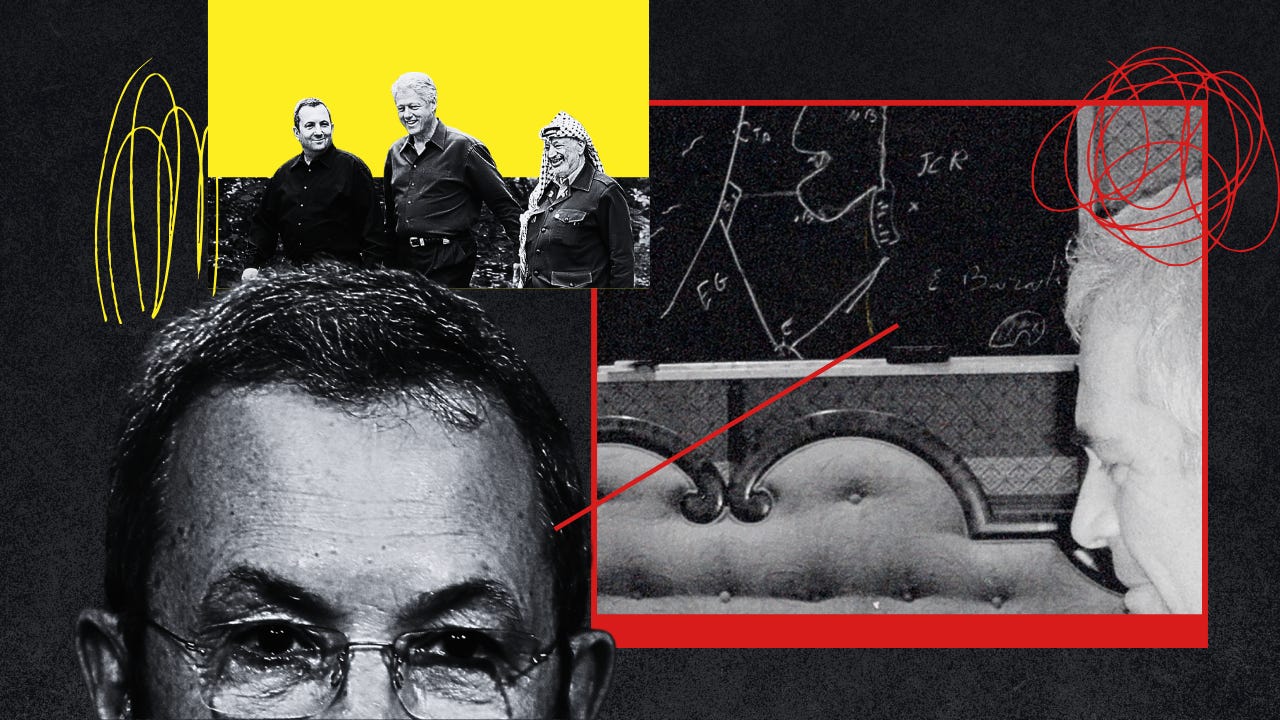
It’s UNGA week: the annual U.N. General Assembly gathering in Manhattan. Diplomats from all over the world descend on the city, sporting lanyards and sidestepping placard-waving protests. Sirens blare all day, clearing the way for the motorcades of global leaders. The gridlock makes Uber and taxi drivers lose their minds.
For the rest of us, the Babel pinging around the canyons of steel is our yearly reminder of the broken promise of global cooperation – and the fact that the human species just can’t get its shit together.
This year promises to be especially heartbreaking. It’s the third year of a real-time, video-broadcast genocide, with no nation willing or able to mount any meaningful resistance.
UNGA 81 provides a good opportunity to rethink one of the greatest exercises in diplomatic can-kicking in modern history: the Oslo Accords, the much-lauded attempt at a solution to “Israel and the Arabs” that now appears to end with the Gaza genocide.
The Epstein files have much to tell us about the strange game that left the Palestinians no better off, but won three men – Arafat, Rabin, and Peres – a Nobel Prize in 1994, and lionized Terje Rød-Larsen, a Norwegian politician, diplomat, and an eminently corruptible buddy of Jeff’s.
Oslo and Jeff go together like peanut butter and jelly in modern Middle Eastern history – not because Epstein was in the room from the beginning, but because he attached himself to the main players in the same inexplicable way that the Accords themselves played out. The ultimate accomplishment of the Accords was to sideline Palestinian claims to property and nationhood while giving the appearance of progress – a mile marker on the road to Gaza today.
The Oslo negotiations started in secrecy in 1992, sponsored by the Norwegian government. The process created the Palestinian National Authority (PA) and involved the return of exiled leaders like Yasser Arafat to Palestinian territory. But the ultimate goal of the talks was always vague. Israel refused to formally accept the creation of a Palestinian state, maintained military control over a majority of the occupied territory, and further divided Palestinians by severely restricting travel between Gaza and the West Bank.
The Accords also allowed Israel to chop the West Bank into strictly defined, military-checkpointed areas designated A, B and C – with C containing roughly 60 percent of the occupied territories and remaining under Israeli control. The delineated area included superhighways reserved for settlers who had access to modern irrigation systems, while Palestinian farmers just across the arbitrary line were relegated to dirt roads and pre-industrial water systems. The militarized checkpoints on the borders of the “areas” meant – for Palestinians – long waits, strip searches and other humiliations and sometimes deadly delays for people needing hospitals, including women in childbirth.
Benjamin Netanyahu was not one of the Oslo negotiators. But he played a role in their application. He was first elected prime minister in 1996. A year later, he and Arafat signed an agreement regarding Israeli military presence in the violently contested Hebron area. Netanyahu later claimed the so-called Hebron Protocol would allow Israel to unilaterally decide what constituted a military location. He boasted to a group of settlers: “Why is that important? Because from that moment on, I stopped the Oslo Accords.”
It’s not clear he gets to claim that credit, though.
Netanyahu’s political rival Ehud Barak, a nominal liberal and soon-to-be close personal friend of Epstein’s, was elected prime minister in 1999. While less confrontational than Netanyahu, Barak was more effective with the facts on the ground, as the settlements were sometimes called. In barely two years, Barak approved more new settlements on Palestinian land than Netanyahu had in three.
The Oslo Accords officially died under Barak at a Clinton-sponsored meeting between the two sides at Camp David in 2000. The Israelis showed up with no formal written offer and Clinton officials conveyed their proposals to the Palestinians. When the meeting ended without an agreement, Clinton praised Prime Minister Barak’s “courage,” and blamed Arafat, who had refused to back down on the right of Palestinians to return. The narrative stuck and the Israeli slogan henceforth would be: We have no partners for peace.
Meanwhile, the human tide continued pouring out of the former Soviet Union, a process that started in the 1990s, financed in large part by Epstein’s great benefactor, Les Wexner. By 2010 – 18 years after the first secret Oslo meetings – the number of settlers had tripled. According to the Institute for Middle East Understanding (IMEU), the Palestinians later concluded that the Oslo Accords had merely inaugurated a tradition of Israel repeatedly using the appearance of negotiations as cover for expanding settlements.
The Accords led to a dramatic influx of settlers into the Occupied Territories, along with the incremental loss of freedom and property for Palestinians, relegating them to be labeled “terrorists” and turning them into international poster people for the world’s oppressed.
So where does Epstein come into all this?
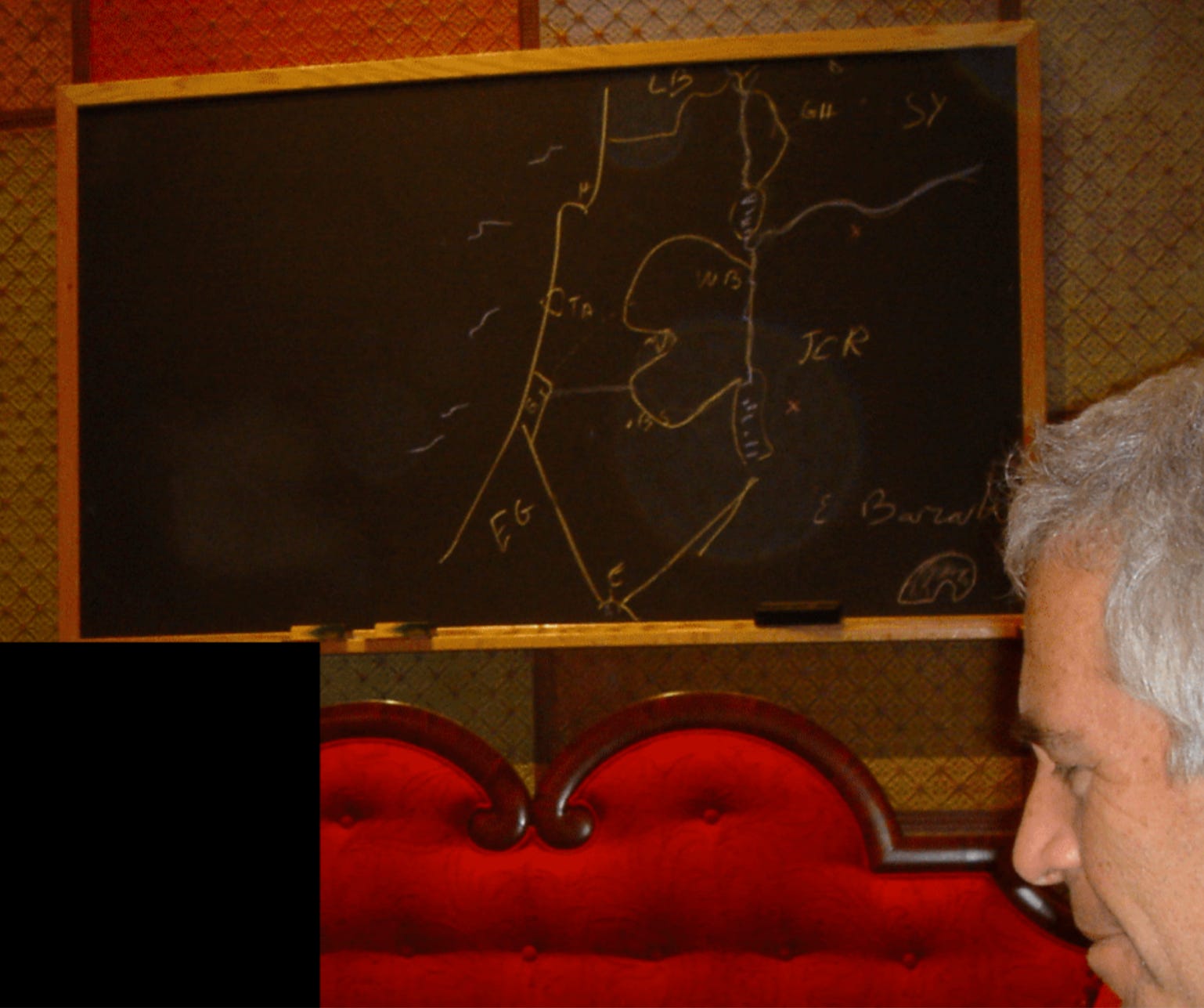
Though he seems to have really started skulking around the U.N. after his prison term in Palm Beach, he had met Barak for the first time in the early 2000s. The two men became fast friends, and numerous pictures in the files show them together. In one shot of Epstein in his Manhattan townhouse, Barak has sketched and signed a map of Israel on a chalkboard, complete with the various corridors and areas delineated by the Accords.
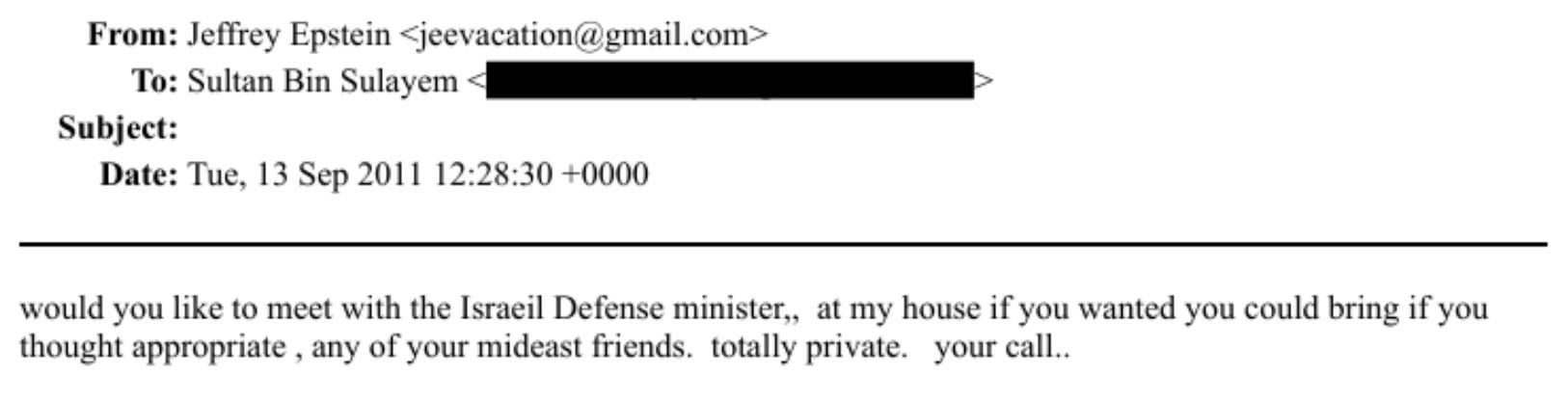
After Barak lost his leadership position, he returned to politics and served as defense minister for nearly seven years. During that period, he met with Epstein in person at least 19 times and had dozens of additional phone calls, according to communications in the files, like these:
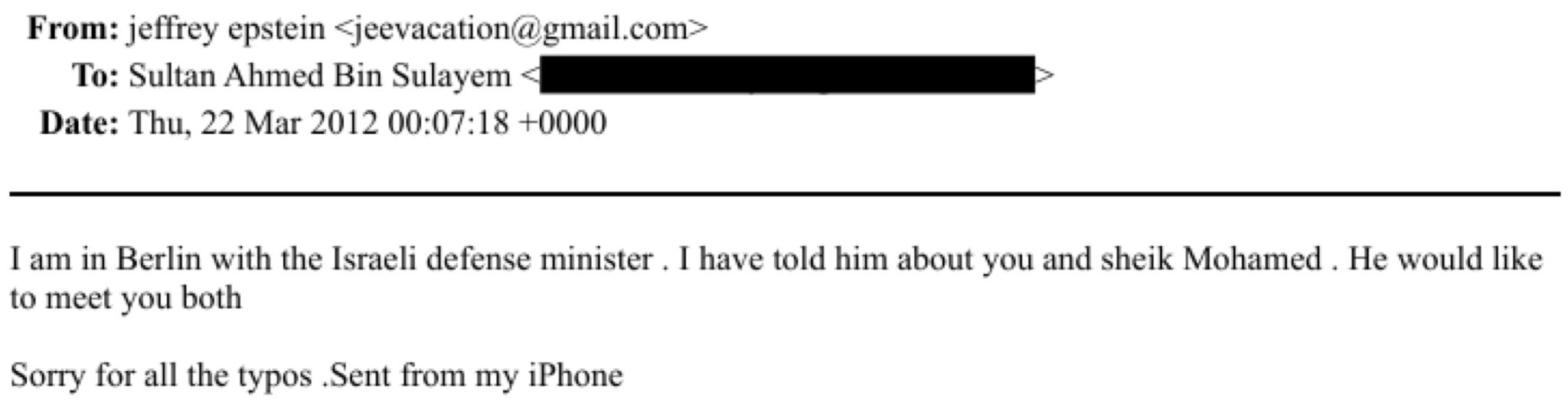
Weeks before Epstein entered prison in 2008, he even visited Israel and toured IDF bases with approval from Barak’s office. Before long, Epstein was embedded into the post-Accords Middle East “peace process” and laying the groundwork for cooperation from Gulf royal families who would ultimately become allied with Israel via the 2020 Abraham Accords.
Epstein was still under house arrest in 2010 when Barak hooked him up with Oslo Accords hero Terje Rød-Larsen. After 2010, as we have revealed in previous Freakshow columns, the Norwegian diplomat remained a fixture in the background of Epstein’s global networking life – an eminently corruptible Viking, scurrying around the Middle East building a network that he shared with Epstein.
That network was so powerful, and Epstein’s access so deep, that he even managed, according to the New York Times, to acquire Islamic relics from the Kaaba, Islam’s holiest site, for his Caribbean island. Rød-Larsen’s wife, Mona Juul, also a diplomat, was even more powerful, eventually even chairing the U.N. Security Council. The couple were later revealed to have taken a personal loan from Epstein.
By the mid-2010s, during the Obama years, the Oslo accords were widely regarded as having failed. But they still carried a public pretense of success: a Broadway play about the Accords was mounted in 2017, and Epstein forked over $70,000 to host a private viewing. An HBO movie was made in 2021.
The Epstein files make clear that, by that point, for people like the little Scandinavian diplomat and Epstein and Barak, the process had devolved into a lot of scheming around two things: 1) hooking up with the Gulf oil powers and 2) making some money.
Nowhere is this more evident than in this audio recording from the DOJ files, which anyone can cue up:
The day after Valentine’s Day, February 15, 2015, Ehud Barak, Epstein, and former Treasury Secretary and Harvard President Larry Summers had dinner at Epstein’s house. They discussed: Israeli demographics and how to keep Israel a Jewish-majority state; Palestinian peace in terms of Israeli regional security and Iran; and concerns about Iran as a nuclear power. Barak also casually shared sensitive information with Epstein from his discussions with then-Secretary of State John Kerry.
But the real meat of the conversation comes when Barak – in his last month as Defense Minister – pitches Summers on a plan he, Epstein and Rød-Larsen had cooked up to make some serious money selling security and economic advice to small autocratic governments. After Summers leaves, Barak and Epstein discuss how Epstein will stay “behind the scenes” if the consulting project gets legs.
In sum: the Palestinians really never had a chance.
In February 2011, Ehud Barak – in his capacity as Israeli Defense Minister and Deputy Prime Minister – met at the White House with Secretary of State Hillary Clinton, Defense Secretary Robert Gates, and National Security Advisor Tom Donilon. They discussed “events in Egypt, Lebanon, Tunisia and Turkey as well as the status of negotiations with the Palestinians,” according to a press release afterward.
The top US officials “expressed their expectations that Israel would move forward in negotiations with the Palestinians.”
But of course, the Palestinians were not in the room. After the Oslo Accords, they were deemed unfit “partners for peace.”
The next morning, Barak had breakfast at Epstein’s Manhattan townhouse. Eventually, he would use an apartment in Epstein’s 66th Street building – where Epstein housed his trafficked women – to write his memoir, published in 2018.
It's outrageous that this could go on for so long.
Listening to the tape… trying to understand what is being said while hearing the teeth biting a fork and chewing loudly 🤢🤮… just another reason to despise this guy and his pals.